
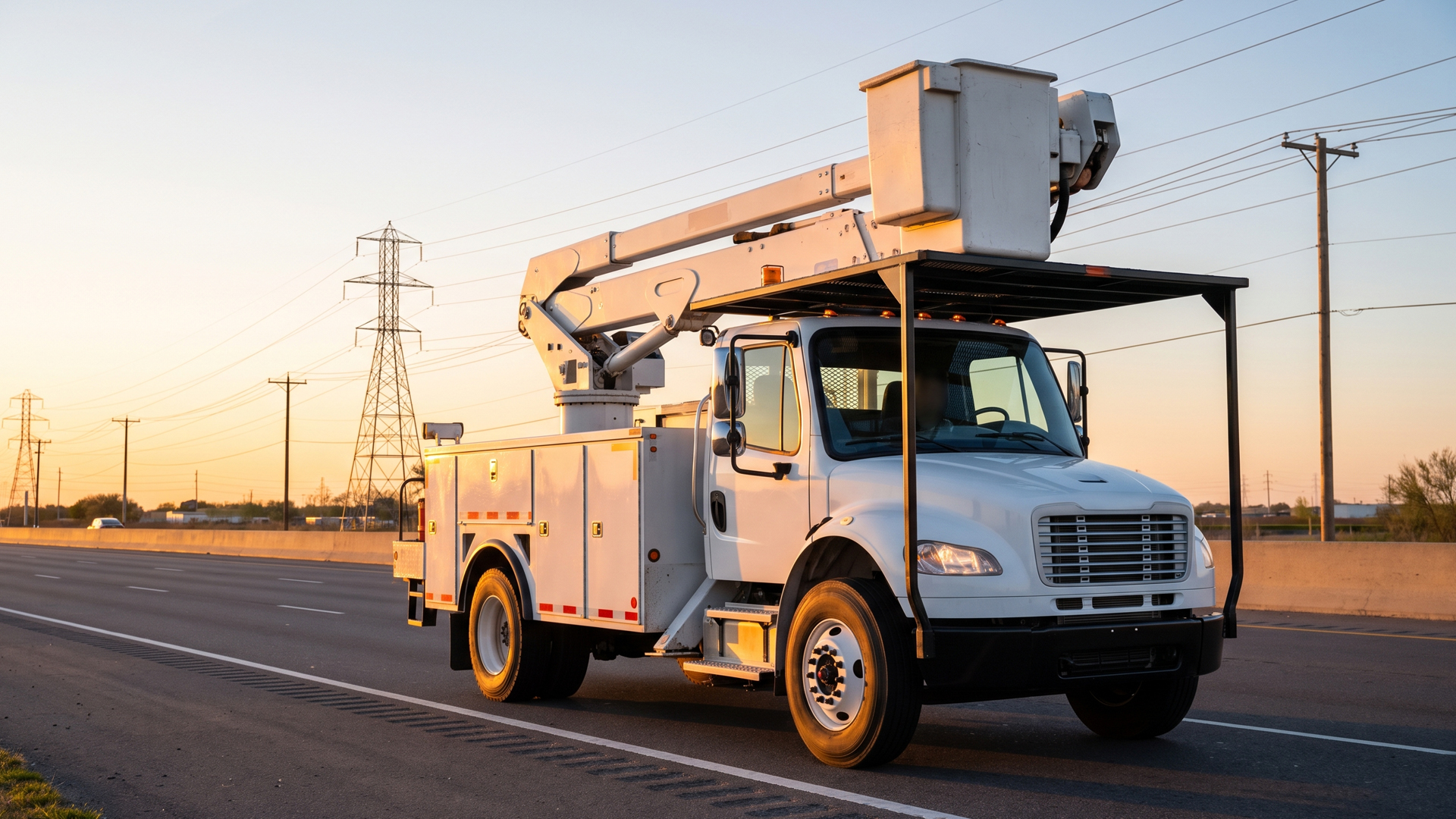
Vehicle transport for utility companies is a mission-critical operation where delays don’t just affect logistics – they affect power restoration timelines, infrastructure build-out schedules, and the communities that depend on those services. When a utility company needs to move bucket trucks, service vans, or heavy equipment across state lines, the speed and reliability of the transport provider directly determines how quickly crews can respond. This guide covers best practices for fleet deployment, what to look for in a transport partner, and how to build a logistics framework that keeps your fleet where it needs to be.
Vehicle transport for utility companies works best through a driveaway model where professional CDL-licensed drivers operate each unit directly to the destination – no trailers, no loading delays, and no height restrictions on aerial equipment. Standard pickup runs 24 to 48 hours, with expedited options available for storm response and emergency deployment. Costs typically range from $0.60 to $1.40 per mile depending on vehicle class and route.
Why Vehicle Transport for Utility Companies Requires a Specialized Approach
Vehicle transport for utility companies is fundamentally different from moving standard commercial vehicles. Utility fleets include bucket trucks with aerial lifts reaching 60 to 120 feet, digger derricks used for pole installation, cable-laying equipment, and service units with tool body configurations that don’t fit standard carrier trailers. These vehicles need to arrive ready to work – not requiring inspection, repair, or equipment adjustment before crews can use them.
The stakes are also higher. A delayed bucket truck during a major storm response can mean thousands of customers remain without power for additional hours. A construction service unit that misses a site mobilization date can push back an entire infrastructure project. Vehicle transport for utility companies must operate with the same urgency and reliability that the companies themselves bring to their service commitments.
Transport Method Comparison for Utility Fleet Vehicles
| Vehicle Type | Driveaway (Recommended) | Open Carrier | Flatbed |
|---|---|---|---|
| Bucket Truck (60-120 ft) | Yes – no height restriction | No – clearance issue | Partial – requires permitting |
| Digger Derrick | Yes – driven as designed | No – incompatible | Yes – with permits |
| Service Van (upfitted) | Yes – preserves upfitting | Yes – basic units | Not typical |
| Crew Cab Pickup | Yes – fastest option | Yes | Yes |
| Pickup Speed | 24-48 hours | 3-7 days | 2-5 days |
| Storm Response Ready | Yes – expedited available | No | Limited |
For vehicle transport for utility companies, the driveaway model handles every vehicle type in the fleet without the height, size, and upfitting restrictions that limit carrier options. Our utility and construction vehicle delivery service is specifically designed for the equipment utility fleets use every day.
The 1987 Group provides vehicle transport for utility companies of all sizes – from regional co-ops to national infrastructure operators. CDL-licensed drivers, 24-hour pickup, and dedicated account management. Request a fleet quote today.
Best Practices for Utility Fleet Transport Planning
Managing vehicle transport for utility companies at scale requires a systematic approach that goes well beyond booking individual truck moves. Fleet managers who handle this well build a logistics framework that anticipates deployment needs, pre-qualifies transport providers, and establishes clear protocols for both routine and emergency moves.
Establish a Primary Transport Partner Relationship
The most effective fleet managers don’t shop for transport providers truck by truck – they establish ongoing relationships with a primary driveaway partner who knows their fleet, their operations, and their standard deployment routes. This relationship means faster scheduling, priority driver availability, and a point of contact who understands the urgency when a storm response is activated.
Pre-Qualify Routes Before Storm Season
Utility companies operating in hurricane, ice storm, or tornado-prone regions should pre-qualify transport routes to key mutual aid locations before storm season begins. Vehicle transport for utility companies during active weather events competes for driver availability across the region. Companies that have pre-established agreements and known driver capacity in key markets activate faster than those calling transport providers cold during a crisis.
Maintain Accurate Fleet Records
Efficient vehicle transport for utility companies depends on accurate, up-to-date fleet records that include each unit’s GVWR, height dimensions, CDL requirements, and any special operational permits. Transport providers need this information to match the right driver and plan the correct route. Outdated records create delays at the scheduling stage and potential compliance issues during transport.
Build a Tiered Response Protocol
Routine fleet rebalancing – moving units between regional depots to optimize utilization – operates on a different timeline than emergency storm response. Vehicle transport for utility companies should have a tiered protocol: standard scheduling for planned moves with 48 to 72 hours of lead time, and an emergency activation pathway with pre-negotiated expedited rates for same-day or next-day requirements.
Storm Response and Emergency Fleet Deployment
Storm response is the highest-stakes application of vehicle transport for utility companies. When a major weather event affects a region, utility mutual aid agreements activate and companies dispatch bucket trucks, digger derricks, and support vehicles from across the country to support restoration efforts. The transport logistics must keep pace with the operational urgency.
Our expedited and emergency delivery service is available specifically for storm-response vehicle moves. We maintain driver availability in key regions and can activate pickups within hours for utility clients with pre-established accounts. For companies that haven’t set up an account before an event, we still work to accommodate urgent needs as driver availability permits – but pre-established partners always receive priority scheduling.
Vehicle transport for utility companies during storm response also requires attention to route conditions. Drivers must navigate around storm-damaged infrastructure, road closures, and high-traffic restoration corridors. Our operations team monitors route conditions in real time and can adjust driver routing to ensure on-time arrival at the utility staging area or restoration zone.
Fleet Rebalancing and Scheduled Deployment Moves
Beyond emergency response, vehicle transport for utility companies includes routine fleet rebalancing – moving units between service territories, regional depots, and maintenance facilities to keep the right equipment in the right location. A utility company operating across 10 states may need to redistribute 30 to 50 units per quarter as service territory demands shift and new infrastructure projects come online.
Scheduled deployment moves allow for better planning, volume pricing, and driver coordination. Working with a transport partner who handles multiple moves per month for the same utility client creates operational efficiency on both sides – the transport provider understands the client’s fleet and preferences, and the utility company benefits from consistent service and predictable pricing.

Frequently Asked Questions
How quickly can vehicle transport for utility companies be arranged during a storm response?
For utility companies with pre-established transport accounts, pickup windows during storm response can be as short as 4 to 8 hours depending on driver availability in the origin area. For companies calling without a prior relationship, standard expedited pickup runs 24 to 48 hours. Pre-qualifying your account before storm season is the single most effective step utility fleet managers can take to improve emergency deployment speed.
Are CDL-licensed drivers required for bucket trucks and aerial equipment?
Yes. Bucket trucks, digger derricks, and most Class 5 through Class 8 utility vehicles require a CDL Class A or B depending on GVWR and configuration. Vehicle transport for utility companies that bypasses CDL requirements creates significant liability and may void insurance coverage during transit. All of our drivers hold the correct license class and endorsements, meeting all standards set by the Federal Motor Carrier Safety Administration for commercial vehicle operation.
How are aerial lifts and upfitted utility equipment handled during transport?
Driveaway transport keeps aerial lifts and utility body equipment fully installed and intact. The driver operates the truck as it was built to operate – no removal of equipment, no securing on a trailer, and no risk of damage from improper loading. Route review before departure confirms height clearances for all bridges and overpasses along the delivery route.
Can you handle vehicle transport for utility companies across multiple states simultaneously?
Yes. Our fleet operations team coordinates multi-state, multi-unit deployments for utility clients with a dedicated point of contact managing each driver and confirming delivery at each destination. Consolidated reporting gives fleet managers a single view of all units in transit rather than tracking individual moves separately.
What documentation is provided for each utility vehicle transport?
Every move includes a pre-departure condition inspection with photographs, a vehicle release form at origin, a delivery receipt at destination, and an odometer log. For utility vehicles under active fleet asset tracking programs, our documentation integrates with standard fleet management records upon delivery confirmation.
Conclusion
Utility fleet deployment is too operationally critical to treat as a commodity logistics problem. The right transport partner brings CDL-qualified drivers, emergency response capacity, route planning expertise, and the kind of clear communication that keeps fleet managers informed and deployment timelines on track. The 1987 Group has been providing this fleet transport service and infrastructure operators across all 50 states since 2019, handling everything from routine fleet rebalancing to rapid storm-response activations with the reliability that utility operations demand. Contact our team to establish your transport account and get a quote for your next fleet move.
