
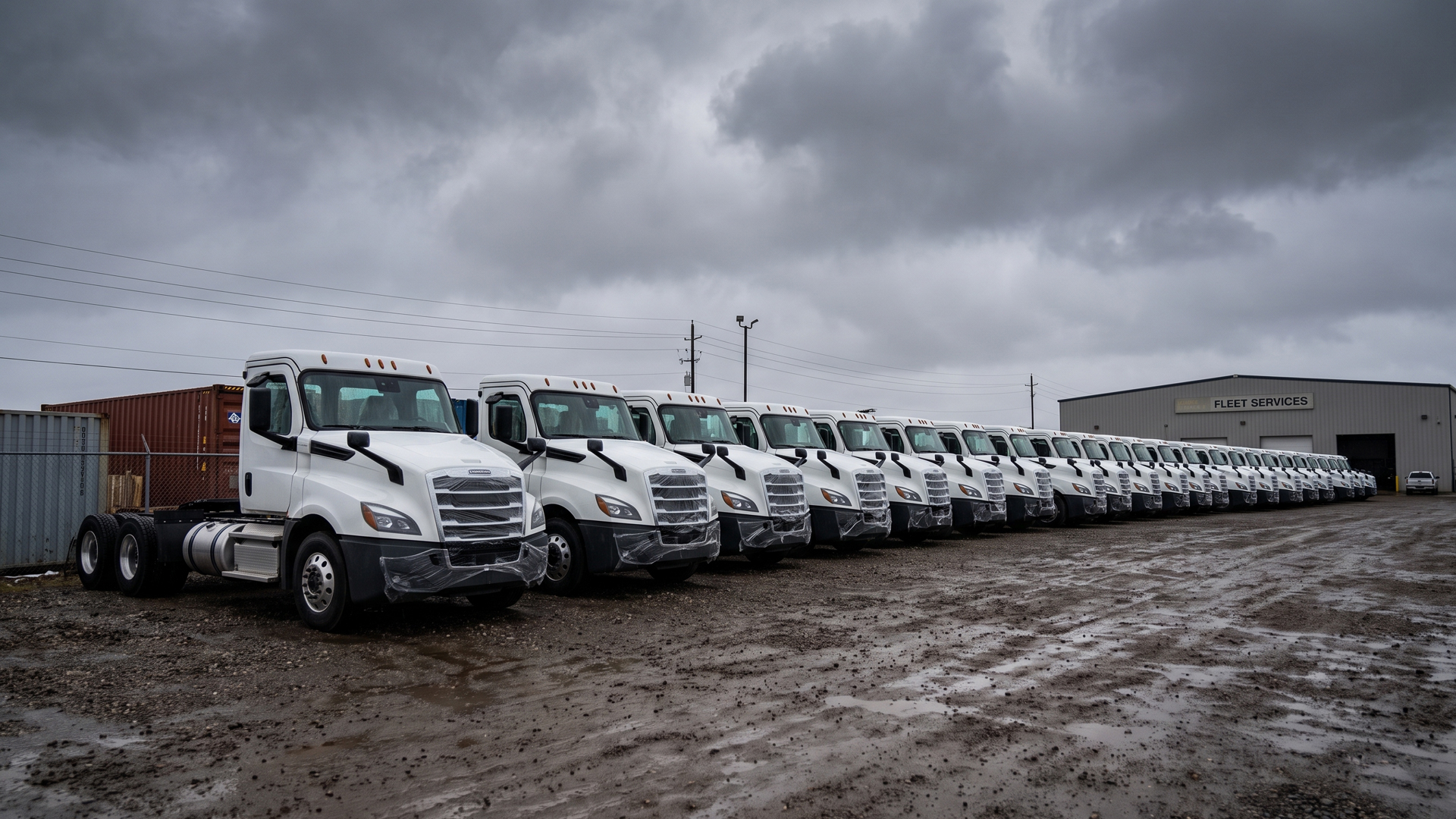
OEM vehicle delivery is one of the most logistically complex operations in the commercial transportation industry, moving thousands of new trucks from assembly plants and staging facilities to dealerships, fleet customers, and end-use locations across the country every year. When a manufacturer builds a fleet of new service trucks, the challenge of getting them from the factory to the buyer without damage, delay, or documentation errors falls on a network of professional driveaway providers. This guide explains how the process works, what it costs, and what fleet buyers and dealerships should expect.
OEM vehicle delivery uses professional driveaway drivers to move new trucks directly from manufacturer staging yards, assembly plants, or port-of-entry facilities to dealerships and commercial buyers. It avoids the loading risks of enclosed or open carrier transport, is better suited for upfitted or specialty commercial units, and typically costs $0.60 to $1.40 per mile depending on route and vehicle class.
What OEM Vehicle Delivery Actually Involves
OEM vehicle delivery covers the final movement of a vehicle from the manufacturer’s custody to the buyer’s possession. That handoff point varies by vehicle type and purchase arrangement. For a standard pickup truck sold through a dealership, OEM delivery often means moving the vehicle from a regional distribution yard to the dealership’s lot. For a fleet of upfitted service trucks sold directly to a utility company, the OEM delivery chain includes the assembly plant, an upfitter facility, a staging yard, and finally the buyer’s depot.
The driveaway model is particularly well-suited for OEM vehicle delivery because it eliminates the damage risk of carrier loading, accommodates oversized and upfitted units that don’t fit standard transport trailers, and allows for flexible routing as delivery schedules change. New vehicles need to arrive in showroom condition – any damage during transport creates immediate warranty and inspection complications that slow down the entire delivery chain.
OEM Vehicle Delivery vs. Carrier Transport: A Direct Comparison
| Factor | Driveaway (OEM Delivery) | Open Carrier | Enclosed Carrier |
|---|---|---|---|
| Best For | Commercial and upfitted units | Standard passenger vehicles | High-value low-clearance vehicles |
| Upfitting Compatibility | Excellent – all sizes | Limited by height/length | Very limited |
| Damage Risk | Low – driven as intended | Moderate – road debris exposure | Low – fully enclosed |
| Cost per Mile | $0.60-$1.40 | $0.50-$1.20 | $1.50-$3.00+ |
| Pickup Lead Time | 24-48 hours | 3-10 days | 5-14 days |
| Documentation | Full pre/post inspection | Basic condition report | Full inspection standard |
For commercial trucks, work vans, and upfitted fleet units, driveaway-based OEM vehicle delivery consistently outperforms carrier options on speed, cost, and compatibility. Our OEM and dealership delivery service handles the full handoff process, including pre-delivery inspections, documentation, and direct communication with the receiving location.
The 1987 Group specializes in OEM vehicle delivery for commercial fleets across all 50 states. Fast pickup, CDL-qualified drivers, and full documentation from first mile to final handoff. Request your quote now and get a confirmed schedule within hours.
How OEM Vehicle Delivery Is Organized at Scale
Large-scale OEM vehicle delivery requires coordination across multiple parties simultaneously – the manufacturer, the upfitter (if applicable), the dealership or fleet buyer, and the transport provider. Each stage of the delivery chain has its own timeline, documentation requirements, and handoff protocol. A breakdown at any point creates cascading delays that affect the entire order.
Staging Yard to Dealership Moves
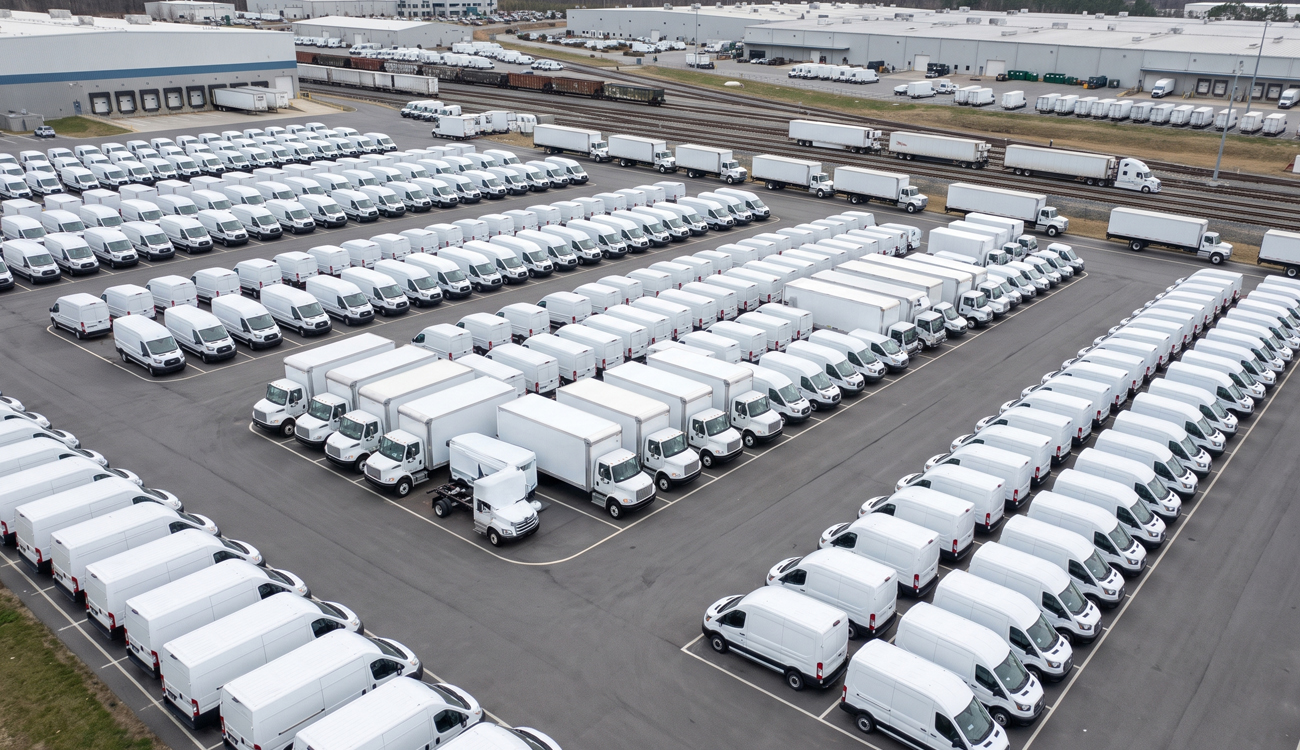
After vehicles leave the assembly line, they are inspected and stored at regional staging or distribution yards before moving to dealerships. OEM vehicle delivery from a staging yard involves scheduling multiple drivers, routing vehicles to the correct dealership locations, and confirming receipt. Large manufacturer programs may involve hundreds of units moving simultaneously to dozens of destinations across multiple states.
Upfitter to Fleet Buyer Moves
Utility companies, telecom providers, and construction firms often purchase trucks directly from manufacturers and route them through independent upfitters before taking delivery. OEM vehicle delivery in this pipeline means moving the truck from the assembly plant to the upfitter, then from the upfitter to the fleet buyer’s depot or job site staging area. Each leg requires documentation and condition verification.
Port-of-Entry Distribution
Imported commercial vehicles – particularly heavy-duty trucks, specialty vans, and commercial work units manufactured overseas – arrive at US ports and require OEM vehicle delivery to regional distribution points or directly to buyers. Port-to-buyer delivery demands drivers familiar with port protocols, customs clearance processes, and condition documentation standards at point of receipt.
Documentation and Inspection in OEM Vehicle Delivery
Documentation is not optional in OEM vehicle delivery – it is the foundation of the entire process. Every vehicle that moves under a manufacturer’s delivery program carries specific documentation requirements that protect the manufacturer, the transport provider, and the receiving dealership or fleet buyer.
Standard documentation for OEM vehicle delivery includes a pre-departure condition inspection with photographic evidence, a vehicle release form signed at origin, a delivery receipt signed at destination, and a mileage log confirming the odometer reading at pickup and delivery. For new vehicles, odometer accuracy is particularly critical because delivery mileage affects warranty start calculations and state titling requirements.
Our operations team manages the full documentation chain on every OEM vehicle delivery assignment. All records are stored and available to the client, manufacturer, or dealership upon request, creating a clear audit trail from origin to final handoff.
CDL Requirements for OEM Vehicle Delivery
Manufacturer vehicle delivery for commercial trucks requires CDL-qualified drivers in most cases. Class 5 through Class 8 commercial vehicles – the truck classes most commonly involved in fleet OEM programs – require a Class A or Class B CDL depending on the vehicle’s GVWR. Manufacturers and fleet buyers that rely on non-CDL drivers for these deliveries expose themselves to liability and void the vehicle’s manufacturer warranty protection during transit.
Our CDL driver services ensure that every vehicle is matched to a driver with the correct license class and any required endorsements, including air brake endorsements for vehicles equipped with air brake systems. All drivers comply fully with Federal Motor Carrier Safety Administration hours-of-service regulations, medical certification requirements, and drug and alcohol testing standards.
This delivery service for Specialty and Upfitted Trucks
Specialty commercial vehicles present unique delivery challenges that standard carrier services cannot address. Bucket trucks with aerial lifts extended above standard trailer height limits, service vans with roof racks and specialized body work, and utility trucks with tool storage systems and hydraulic equipment all fall outside the operational parameters of most carrier transport options.
Driveaway-based Driveaway delivery handles these units by having a qualified driver operate the vehicle as it was built to be operated. There is no risk of damage from improper securing straps, no height restriction issues from trailer clearances, and no need to partially disassemble upfitted equipment before transport. The vehicle arrives at the dealership or fleet buyer in exactly the condition it left the upfitter or staging yard.
For specialty units, our team conducts a route review before departure to verify bridge clearances, state permit requirements for oversized vehicles, and any restricted roads that affect the delivery route. This pre-move planning is standard practice for our fleet transport operations and eliminates the in-transit complications that cause delays for specialty deliveries.
Frequently Asked Questions
What is the difference between This service and standard auto transport?
This process specifically refers to the manufacturer-authorized movement of new vehicles from production or staging facilities to dealerships or fleet buyers. Standard auto transport typically handles used vehicles moving between private parties, auctions, or dealers. Manufacturer delivery carries stricter documentation, inspection, and condition standards because the vehicles are new and under manufacturer warranty from the moment of production.
How are new trucks protected from damage during This process?
Driveaway-based Driveaway delivery protects new trucks by having a qualified driver operate the vehicle along the delivery route rather than loading it onto a carrier. This eliminates securing-strap damage, road debris impact from open trailers, and loading-ramp damage that frequently affects carrier shipments. Pre-departure and post-delivery inspections document condition at every stage.
Can This service accommodate entire dealership orders?
Yes. This delivery approach at dealership scale involves coordinating multiple drivers, scheduling staggered pickups from the manufacturer’s staging yard, and delivering vehicles to the dealership over a compressed time window. Our fleet operations team manages these multi-unit programs with consolidated scheduling and delivery confirmation for each unit in the order.
How is delivery mileage handled for new vehicles?
Every Every manufacturer delivery assignment includes a documented odometer reading at both pickup and delivery. The mileage log is part of the delivery package provided to the receiving dealership or fleet buyer. For warranty and titling purposes, this record confirms exactly how many miles were added during transport and provides a verifiable baseline for the vehicle’s odometer at the point of purchase.
What states do you cover for This service?
The 1987 Group handles New vehicle delivery across all 50 states. From manufacturer plants in the Midwest and South to dealerships and fleet buyers on the coasts, our driver network covers every major route and can accommodate remote destinations with appropriate lead time. Contact our team for specific origin-to-destination availability and scheduling.
Conclusion
This delivery operation is a high-stakes operation where documentation, driver qualification, and on-time performance directly affect manufacturer relationships, dealer satisfaction, and fleet buyer operations. The driveaway model is the most reliable and cost-effective approach for commercial trucks, upfitted units, and specialty vehicles that carrier transport cannot handle properly. The 1987 Group has been executing Manufacturer delivery programs programs for manufacturers, dealerships, and commercial fleet buyers across the country since 2019, bringing the CDL-qualified drivers, operational infrastructure, and documentation standards that new vehicle delivery demands. Contact our team to discuss your next OEM delivery program and get a tailored quote within the day.
