
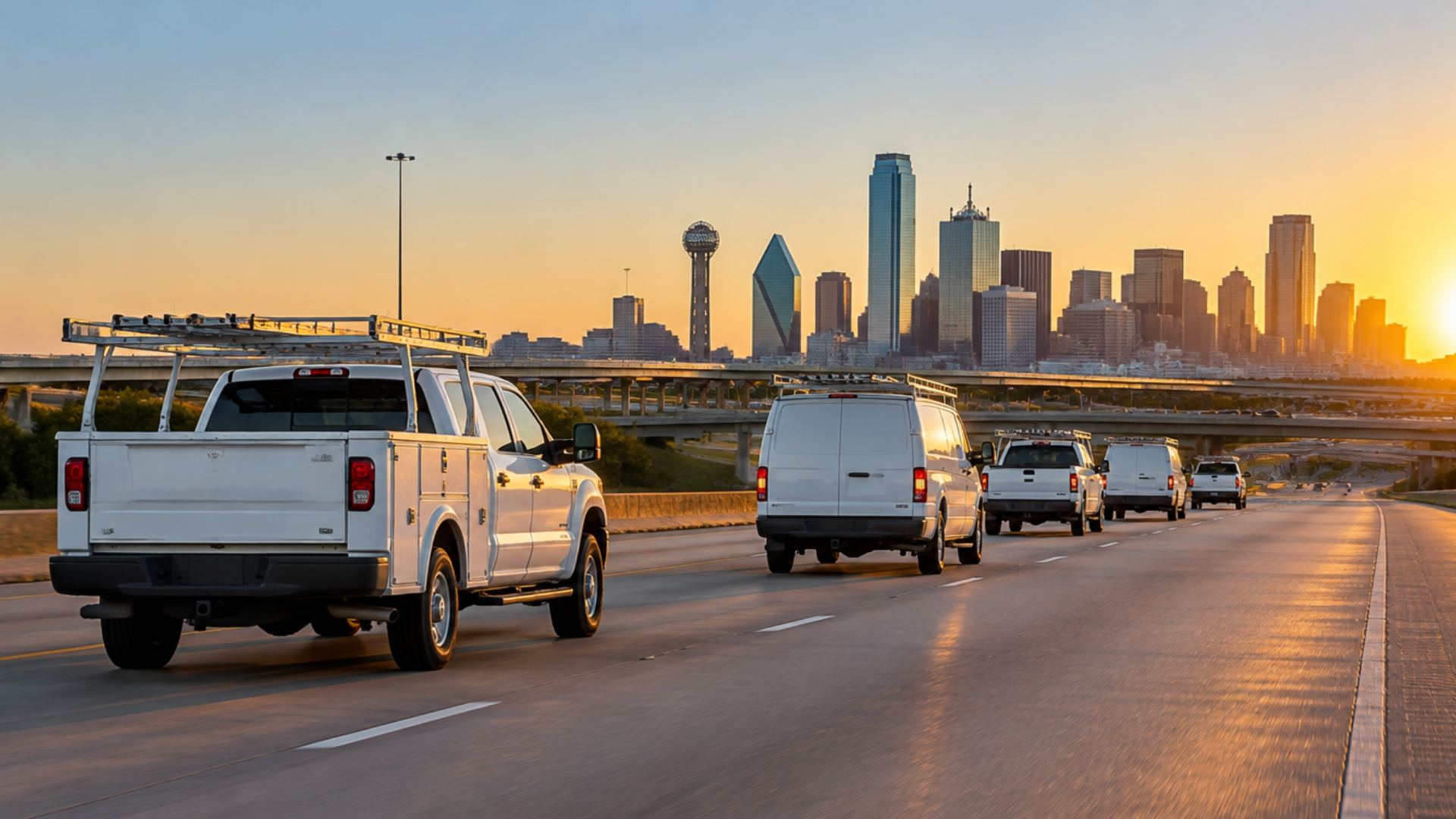
Fleet delivery Dallas jobs look simple on a map and turn complicated on the road. The Dallas-Fort Worth metroplex is one of the largest in the country by area, and a single move can cross two cities, several county lines, and a dozen interchanges before it reaches open highway. Add Texas summer heat and constant construction, and timing becomes the real challenge. This guide covers 3 moves that keep a DFW fleet job on schedule.
Why Fleet Delivery Dallas Needs a Metroplex Plan
Dallas and Fort Worth sit about 30 miles apart, yet planners often treat them as one stop. In practice, a pickup in Fort Worth and a delivery in northeast Dallas can take longer than a short interstate trip in many other states. Good fleet delivery Dallas planning starts by naming the exact pickup and drop addresses, not just the city.
The metroplex is also a natural crossroads. Several major interstates meet here, which is why so many businesses use it as a starting point or a stop on a longer route. That reach is also why vehicle transport DFW teams plan every move around the highway first and the calendar second.
Quick Answer
Fleet delivery Dallas works best when you confirm the exact pickup and drop addresses, choose the right corridor for your destination, and schedule around heat and rush hour. A partner that assigns the right driver, documents every unit, and manages the route actively keeps the whole move under control.
Move 1: Treat DFW as Two Hubs, Not One
Dallas and Fort Worth each have their own industrial areas, dealership clusters, and logistics parks. Between them sit the suburbs, the airport, and long stretches of commuter traffic. A fleet manager who says “Dallas” may mean a yard in Fort Worth, and the difference changes the driver’s first hour.
Share full street addresses, gate hours, and a site contact with your transport partner before dispatch. Fleet delivery Dallas teams that do this avoid the most common delay: a driver arriving at the wrong side of the metroplex. If the vehicle is leaving Texas after pickup, say so early, because the first leg of a long trip should point toward the right interstate.
Receiving locations often include dealerships, warehouses, and service yards with set receiving hours. Confirm them in advance. A clean handoff is a basic part of fleet delivery Dallas businesses can count on, and it prevents a unit from sitting outside a closed gate.
Multi-unit jobs add another layer. When several vehicles leave one yard, decide whether they travel together or in staggered groups. Staggered departures can ease pressure on a receiving dock, while a single group keeps the schedule simple. Either way, one clear plan and one point of contact make driveaway services Dallas teams request far easier to manage.
Move 2: Pick the Corridor Before the Day
Several interstates meet in the metroplex. Interstate 35 runs north toward Oklahoma and south toward Austin and San Antonio, and it splits into 35E and 35W through the area. Interstate 45 leads southeast toward Houston. Interstate 30 runs east toward Arkansas and west through Fort Worth. Interstate 20 crosses the south side and heads west toward the Permian region and east toward Louisiana.
Choose the corridor that fits the destination, then choose the day. A move headed to Houston has a different best path than a move headed to Oklahoma City. Truck transport Texas teams that run these routes every week often find that the right corridor saves more time than an earlier start. The state-level rules and road conditions are published by the Texas Department of Transportation, which is a useful stop before any long run.
For a closer look at what we handle locally, see our page on driveaway services in Dallas. If your route continues across the state, our guide to commercial vehicle transport in Texas covers the wider picture, including distance planning between cities.
Move 3: Plan Around Texas Heat and Traffic
Summer in North Texas is hot, and long highway days put steady stress on vehicles and drivers. Build the schedule so the longest legs happen early, and make sure each unit is fueled and in good working order before pickup. A short readiness check is cheap compared with a breakdown on a hot shoulder.
Traffic is the second variable. Morning and late afternoon peaks slow even short trips across the metroplex, and construction projects shift from month to month. Vehicle transport DFW planners often start a move before the peak or after it, so the driver reaches the interstate on a clear run. Fleet delivery Dallas schedules that include a small buffer for weather and lane closures tend to hold up better than schedules built to the minute.
Severe storms can also pass through the region, so check the forecast along the full route, not only at the pickup. If a storm is likely, moving the pickup by a few hours or a day usually costs less than waiting out a delay.
Fuel and rest planning matter here too. Long Texas stretches can run for many miles between large stations, so confirm stops that can fit a bigger vehicle. Truck transport Texas drivers also follow federal hours-of-service limits, which shape how far a unit can realistically travel in one day. A plan that respects those limits is a plan that can actually be delivered.
Fleet Delivery Dallas Corridors at a Glance
| Corridor | Where It Leads | Planning Note |
|---|---|---|
| I-35 (35E and 35W) | Oklahoma to the north, Austin and San Antonio to the south | Heavy truck volume, so avoid peak hours |
| I-45 | Houston to the southeast | Main route for Gulf Coast moves |
| I-30 | Arkansas to the east, Fort Worth to the west | Links the two city centers |
| I-20 | Louisiana to the east, West Texas to the west | Useful for east-west moves that skip downtown |
Planning a fleet move in or out of North Texas? Contact The 1987 Group with your pickup location, destination, and timeline, and our team will review the route with you.
How The 1987 Group Handles Fleet Delivery Dallas
The 1987 Group is a driveaway company that moves single units and full fleets for businesses across the country, including the Dallas-Fort Worth area. Our fleet transport services cover multi-unit moves with organized routing and skilled drivers, and our nationwide route coordination helps plan trips that cross several states.
Every Dallas move follows the same five steps:
- Planning the move. We review your vehicles, pickup, and timeline.
- Assigning the right driver. A driver is matched to your vehicle type.
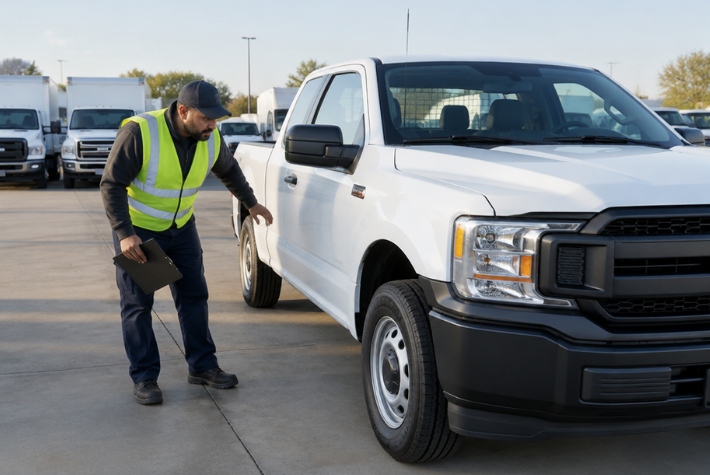
- Pickup coordination. Each unit is checked and documented at pickup.
- Transport oversight. We watch the route and share updates along the way.
- Delivery completion. The vehicle is delivered and documented at the destination.
Our services include fleet vehicle transport, single vehicle delivery, specialty vehicle delivery such as bucket trucks, long-distance transport, expedited delivery, and CDL driver services. That range makes fleet delivery Dallas jobs simpler for teams that move more than one type of unit, and it keeps fleet delivery Dallas customers’ vehicle transport DFW needs under one point of contact.
Frequently Asked Questions About Fleet Delivery Dallas
What is fleet delivery Dallas businesses use?
It is the driveaway services Dallas companies book, in which professional drivers move commercial vehicles from one location to another. Companies use it to relocate trucks, vans, and work vehicles in and out of the Dallas-Fort Worth area.
Why does the exact address matter in the DFW area?
Dallas and Fort Worth are about 30 miles apart, and traffic can make that distance feel much longer. Full addresses let the planner estimate the first hour of the move accurately.
Which highways matter most for North Texas fleet moves?
Interstates 35, 45, 30, and 20 carry most commercial traffic through the metroplex. The best choice depends on the destination, traffic, and weather.
How does summer heat affect truck transport in Texas?
Heat adds stress to vehicles and drivers. Scheduling long legs early in the day and checking each unit before pickup helps avoid delays.
Can Dallas be a starting point for longer trips?
Yes. Interstates from the metroplex reach Oklahoma, Louisiana, the Gulf Coast, and West Texas, which makes it a practical launch point for fleet delivery Dallas customers who need multi-state trips.
Conclusion
Strong fleet delivery Dallas planning comes down to three habits: treat the metroplex as two hubs, pick the corridor before the day, and plan around heat and traffic. Done well, a sprawling market becomes a predictable one. The 1987 Group helps businesses plan and complete these moves across Texas and the rest of the country.
Call (631) 855-0997 or request a quote online to plan your next Dallas fleet move.
